Winter: A Sahariya farmer's longest season
Harendra Khandel’s winter farming season reveals the debt, crop loss, delayed support and relentless labour behind survival on the land.
From October to March, winter settles heavily over Harendra Khandel’s life. For him, this is not just a season; it is the backbone of survival. As a young Sahariya Adivasi farmer from a small village in Madhya Pradesh, Harendra grew up watching his parents work as agricultural labourers, never certain of wages or food. Today, after years of struggle, he owns six and a half bighas of land (1 bigha = 2500 m²) and cultivates two more on batai, a sharecropping arrangement, where the landowner takes half the produce without sharing costs.
Winter crops are crucial. Wheat, mustard, peas, and seasonal vegetables fill his fields, located a kilometre from his home. Harendra walks there daily as a part of his relentless routine. During the day he works as a Zenith Sahariya Youth Leader, and after dinner, at dusk, he heads to his fields. Nights are spent guarding crops from animals, and mornings begin with a quick bath at the field’s well before he returns home and heads back to work.
This winter tested him hard. In October 2025, Harendra borrowed INR 75,000 from relatives to sow peas. Three days of unseasonal rain destroyed the crop. When he approached the village Panchayat Secretary for compensation, he was turned away. Officials claimed there was no widespread damage. Harendra refused to accept that. He pushed for a survey and managed to initiate the compensation process, even though he knew the odds. His family has received compensation only once, back in 2018. The process itself takes six to eight months. Yet, in November 2025, he borrowed a similar amount and resowed peas and wheat, hoping for a March 2026 harvest.

Harendra sharing his story with us.
For Harendra, farming is not just income; it is culture. During Diwali, his family worships their fields, praying for protection from pests and disasters. That faith is tested nightly. Nilgai, deer, wild boar, sambhar, and rabbits regularly raid crops. Armed with a torch, sticks, and stones, Harendra spends long nights chasing them away. Winter is also the wedding season, but celebrations are short for him. He eats quickly and returns to guard the fields.
Irrigation of crops depends on a community borewell. When it broke down, Harendra spent over INR 30,000 of his own money to repair it, knowing other farmers relied on it too. State subsidised fertilisers help, but often do not arrive on time. The INR 12,000 annual farmer assistance he is entitled to has not been credited for months and he has no crop insurance, thereby exacerbating the unpredictability that already plagues farming returns.
Harendra acknowledges that women in his family carry much of the agricultural load. His mother, sister, and wife weed, water, and harvest produce and also bring him food. After harvest, tradition dictates that a portion of the crop is gifted to a sister or daughter acknowledging their centrality to its growth.
When it comes time to sell, Harendra faces another set of calculations. Government procurement offers better prices and subsidies, but payments arrive late. Private traders pay around 20% less but offer instant cash. Many farmers, already operating on loans are forced to accept the instant payment option though waiting is more economically viable. To strike a balance, if Harendra is unable to get a fair price at the mandi (wholesale market) auction with private traders, vegetables are sold directly in the nearest towns, but it is additional work.
Winter ends in March, but the strain does not. Harendra’s story is not one of comfort or security. It is one of persistence, of borrowing, resisting, re-sowing, and standing guard through the night, season after season, trusting on land that gives only if you refuse to give up.
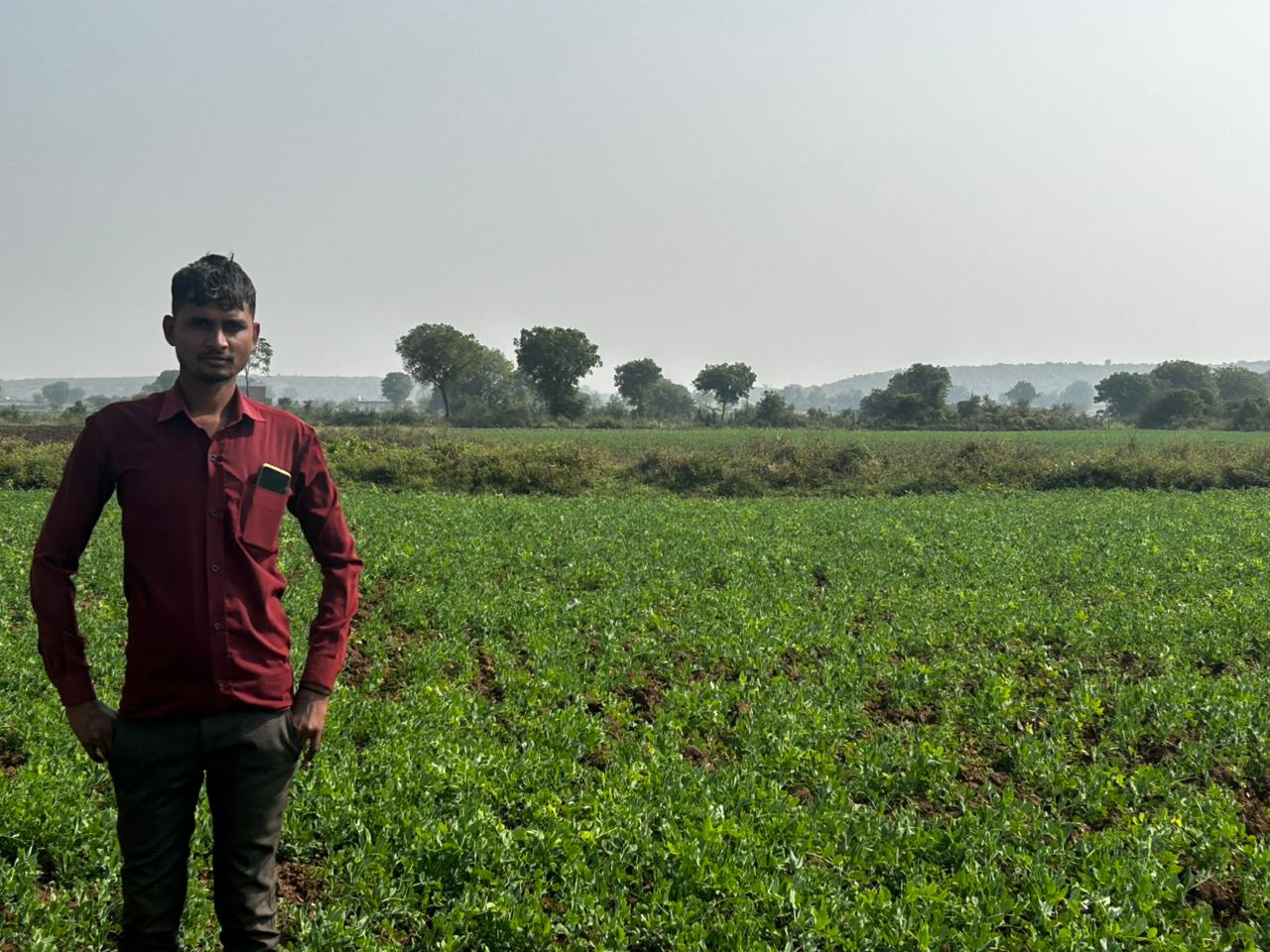
Harendra Khandel in his fields.


