Village of widows: stories of resilience
In Aamdar Colony, unsafe quarry work, silicosis and displacement shape daily life as the Sahariya community seeks rights and safer futures.

In an era of metaverse, Midjourney and expeditions to Mars, we turn away from those who are right in front of us. On the stairway to create spaces in other dimensions, we ask you to refocus on a small geographical space in the heart of Madhya Pradesh—Aamdar Colony.
This Adivasi hamlet (basti) of 25 houses was resettled far away from the main village of Majhera. When we say resettled, we mean stacked in a corner without the bare minimum of clean drinking water, electricity, roads and availability of vocations; all of which we proudly cite under the Article 21 right to life in our Constitution. If this was not harmful enough to their pre-existing vulnerability of being Sahariya Adivasi, active mining sites also operate in eco-sensitive zones around them.
The extreme marginalisation and oppression of the Sahariya community, which furthers into lack of education, deteriorating health standards, lack of safety and poverty, is a cycle that the world watches from a distance and only ever comes close to when they need stock footage for their documentary films.
The current resettlement of Aamdar from Majhera is another rock, feebly stacked on that wall of oppression. This reality leaves them with very few options in terms of occupation as well, so their main source of livelihood has been mining in stone quarries. They do this work without any safety equipment, leaving the Adivasi people at high risk of silicosis; this risk has actualised at a terrible rate, to the extent that Majhera is called Raandon ka Gaon- ‘village of widows'.
The mining sites’ proximity to Aamdar also caused their water to become undrinkable and unsafe because of its high iron content. Through the sheer will of the community and legal support provided by Zenith, the mining activities tendered by the government around Majhera (especially in eco-sensitive zones) were shut down, however, illegal mining still continues.
These mining quarries are not resealed and reclaimed when activities cease. During the monsoon, water fills these deep trenches, and this pit of sorrow, death and ill health becomes the playground for the children of Aamdar. They cannonball into these quarries, with untethered joy. The lack of opportunities and access to places has inadvertently allowed the children of Majhera to reclaim spaces.
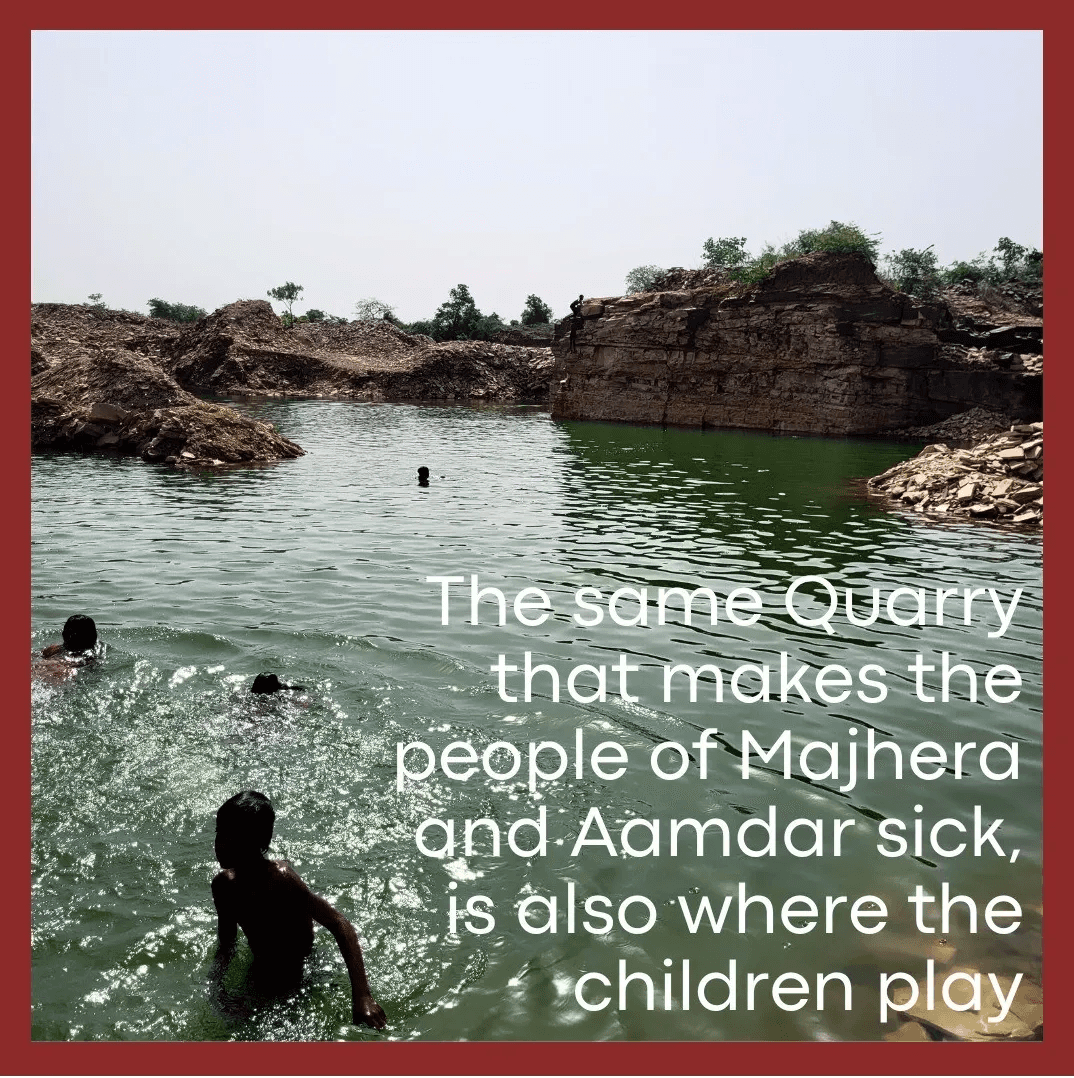
But is this how children are to reclaim spaces?
If it is, perhaps it is our responsibility in ensuring safer places for them to claim. Our (yours, mine and the government’s) complacency in not creating safer spaces, allows for this contradiction of death and joy to fester further, in Aamdar.
As we begin to see these realities we also ask the people of Aamdar: “If there have been so many deaths because of mining, why do you still continue to work at the quarry?”
They replied,
“Jab kuch aur kaam hai nahi, toh aadmi kya karega, roti paani toh chahiye na?”
The politics of space is such that the right of people to occupy space and land has, in the end, become a matter of privilege and not of right; that is the fight we have to understand. That is the discourse of rights we have to dismantle and build from the ground up, with the Adivasi people and their context at the centre of it.
Artwork by: Mayur Nanda


