A glimpse into my childhood: Life in Gokulpur
Ramlakhan Sahariya recalls childhood in Gokulpur, shaped by family labour, migration, village games and a determined pursuit of education.
Ramlakhan Sahariya, a member of the Sahariya community, joined Zenith Society in 2024. He was introduced in the previous issue of this newsletter which outlined his background, community service and aspirations. In this edition, he shares a personal account of his childhood. His story offers a rare glimpse into the lives of Sahariya children. The article has been translated into English and edited by the Zenith team for this series.
I was born in 1997 in the village of Gokulpur. When I was around 3 or 4 years old, my joint family of twenty, including my grandmother, siblings, parents, uncle, and aunt and their children, lived on a Pandit’s farm. My grandmother used to collect cow dung to make dung cakes, and my father worked as a tractor driver. There wasn’t much money, so we all worked there to get by.
I remember the days spent running around the farm and playing with other kids. We played many games together including piggyback rides, Ram-Lakshman (a game based on the Ramayan), Gilli Danda, Kabaddi, and the Parrot Fly (Tota Udd) game and more.
Sometimes, my parents had to travel for work. Once, our family went to Kachanpura to transplant paddy for a month. But my grandmother, my uncle’s children, and I stayed behind on the farm. When my parents came back, they brought a bicycle for me and my brother. I was happy about the bicycle, but around that time, I got sick with a skin disease. My father spent some of the money he had earned on my treatment with a private doctor. While I recall this now with a tinge of sadness, I got better and was back to playing with my friends in no time.
As my grandfather passed away and my grandmother grew older, she stopped working on the farm, and our family went back to our native village. With so many people in the family, it was tricky to fit everyone into the small hut owned by my grandfather. My father and uncles moved out to find work as labourers, moving from one relative’s house to another, staying for a few days or weeks at a time.
Later, my father started working in the stone quarries at Bohadapur, about 30 kilometres away. I don’t know how he managed, travelling the distance by bicycle followed by hard labour, but he always made sure we had enough for the day. My mother worked at a stone crusher, too. It wasn’t easy, but it was what we had to do. Our family then moved to Bohadapur itself to live there for a few years. During this time, my grandmother passed away. We returned to our native village with enough savings to build a pathor (thatched hut).
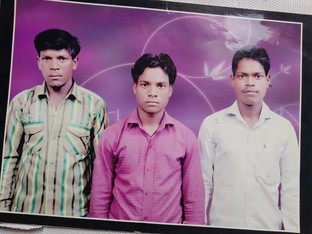
Ramlakhan’s family and friends
One day, my father visited my maternal uncle’s village and saw him reading verses from the Ramayana. My uncle was a teacher, and I could tell he loved what he did. He also wrote songs for our community and was always helping others. I thought that if I studied well, I could help my people too. That’s when I decided I wanted to learn more and my family committed themselves to supporting me with everything they had.
I started going to a small private school located at the temple in the village when I was 7 years old. It was a privilege as most children I knew went to a government school. The school was simple, with children sitting on gunny sacks and had no bathrooms or mid-day meals. But we learned the basics such as counting, letters, and tables. The teacher was kind, and I enjoyed learning. Soon enough, when my father’s health started getting worse, and we could not afford the fees, I had to leave the private school and join the government school. It was a bigger school, and I made new friends. There, we got a mid-day meal of dal, soybean chunks and undercooked rotis. The school was very simple, with just two teachers and we sat on mats. I remember it was difficult to study after school due to lack of electricity and a space to study but we always finished our homework to avoid being punished in school. l looked forward to learning every day, maintained regular attendance and enjoyed a good relationship with my teachers who were from my village nearby. I knew that one day, if I studied hard enough, I could do something good for my community, just like my uncle.
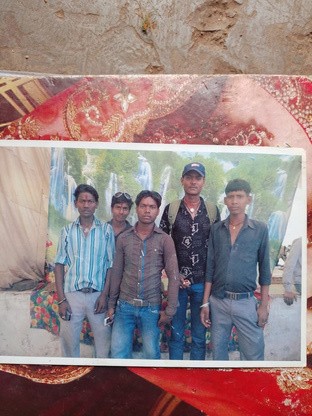
Studio photos, a luxury, were the only access to a camera.
With such high hopes of education, destiny had a different path for me. While I wanted to become a teacher or a government officer, I ended up as a manual labourer in my adult life, even getting caught in bonded labour at one point. I don’t like going back to that time in my life, but I will share with you my story of breaking free from bonded labour to becoming a leader in my community hereafter.
Stay tuned to hear more about Ramlakhan’s inspiring story in our next issue.


