Water is life: A paradox
Mohanpur Pahadiya residents walk two kilometres for water, facing discrimination and repeated broken promises from public authorities.
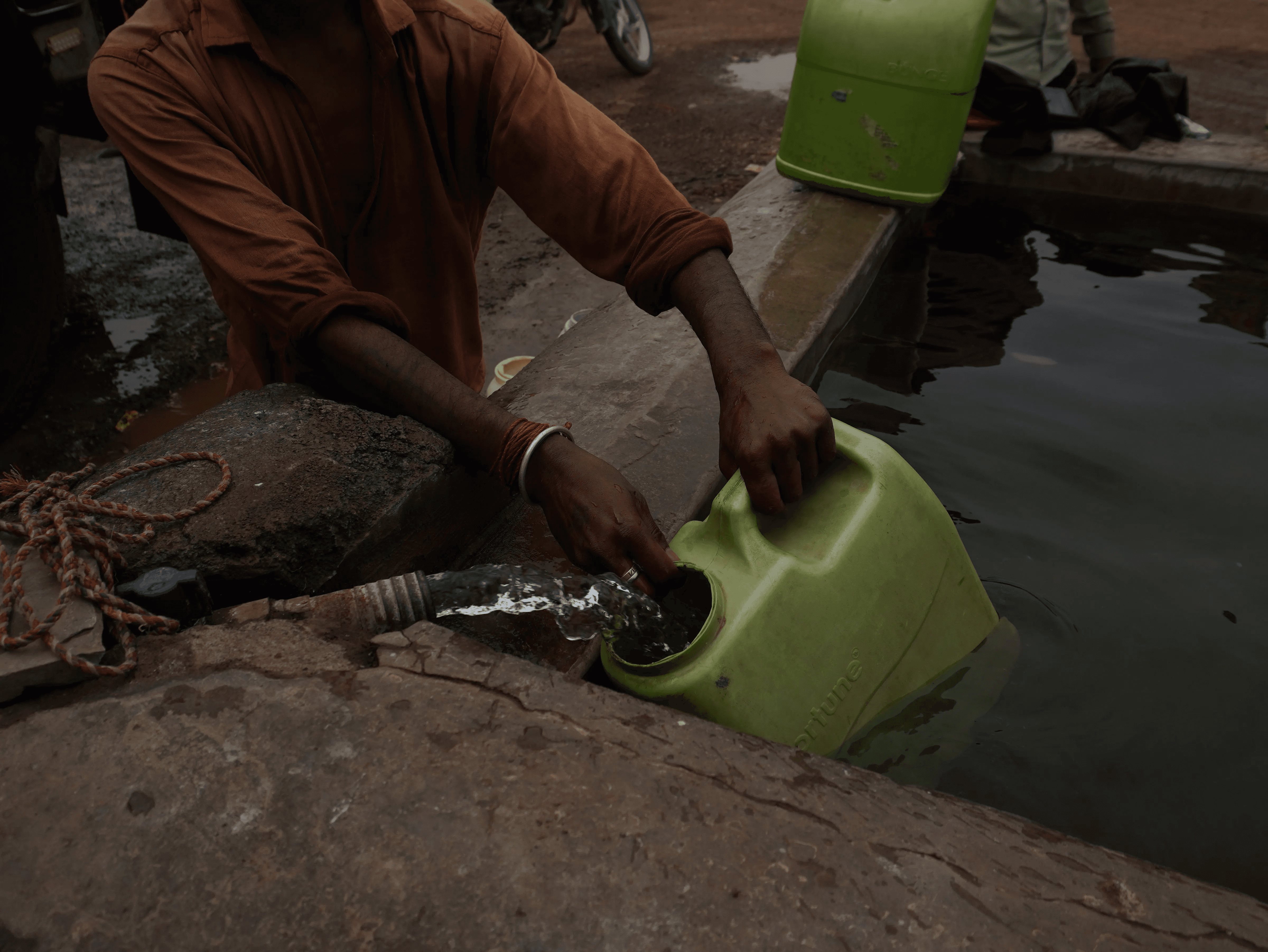
“Water is life” is something we have all heard since childhood. Where there is water, there is life. Buildings, factories, industries, roads, food, clothing, housing and so on are possible only because of water. It can also be said that development is impossible without water.
Even today, there are people in India who have no tap, no handpump, no water tank or any other source of water. Despite many government schemes, people are still deprived of water. These people are not in some faraway corner; they are among us. Millions of such people struggle for water every day, and for millions of reasons water has still not reached them. This is the story of a settlement called Mohanpur Pahadiya in Gwalior, Madhya Pradesh, where people from an Adivasi community live.
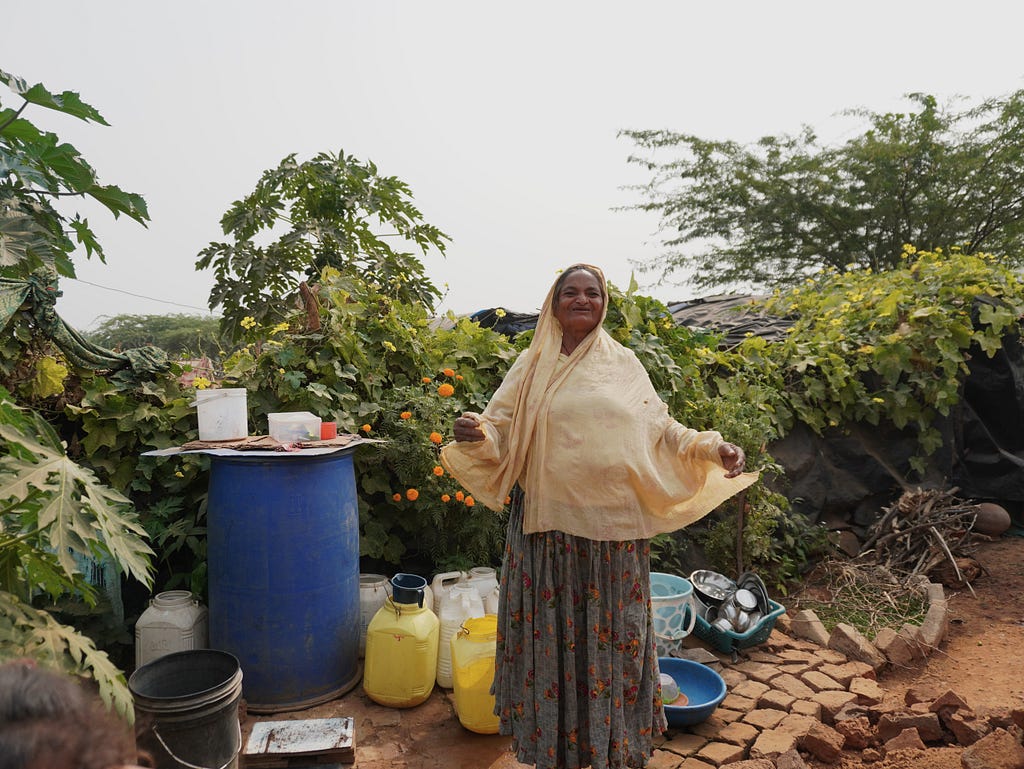
Fifteen to twenty years ago, Adivasi people from Mohanpur migrated to Gwalior in search of food, clothing and housing, and then settled there. In Gwalior, the main livelihood of this community is collecting scrap, and they struggle for everyday needs and basic facilities. Water is one important problem among these needs. An elderly woman from the settlement says:
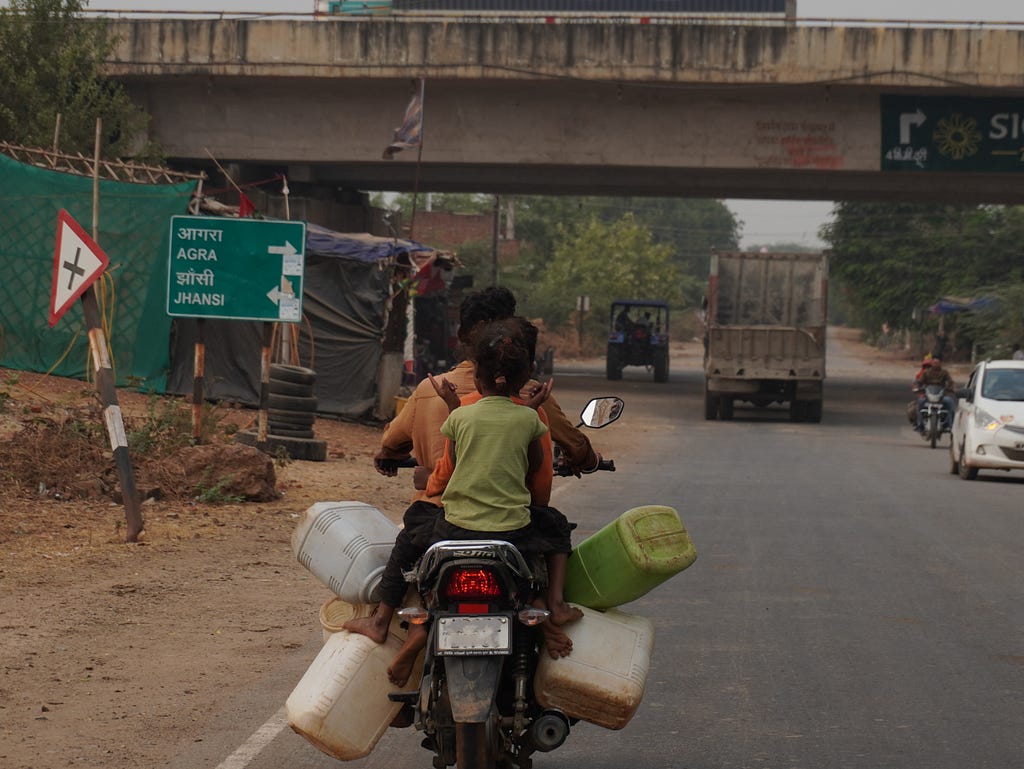
For the past 15–20 years, there has been no arrangement for water in our settlement. There are handpumps in the nearby settlements, but people from the Adivasi community are not allowed to take water from them. When we go to collect water, our vessels are thrown away. Because of this compulsion, we have to walk to a dhaba on the highway, two kilometres from the settlement, to fill water. Most often, the women and children of the household do this work.
When Zenith’s workers understood this problem, it seemed that the path to a solution was simple: the administration could be informed through a letter, and some arrangement for water would surely be made. After all, water is a fundamental right of the people; this right is constitutional.
The people’s struggle for a source of water began in June 2023, and they thought it appropriate to approach their councillor for a solution. They met the councillor with hope and told him about their problem. The councillor assured them that he would speak to the people of the neighbouring settlement and get permission for this community to collect water. The next day, when the people of the settlement went to the nearby settlement to collect water, the people there refused and began to quarrel. When the matter reached the councillor, he supported only the people of the other settlement, not the Adivasi community. This made it clear that the councillor could not solve their problem.
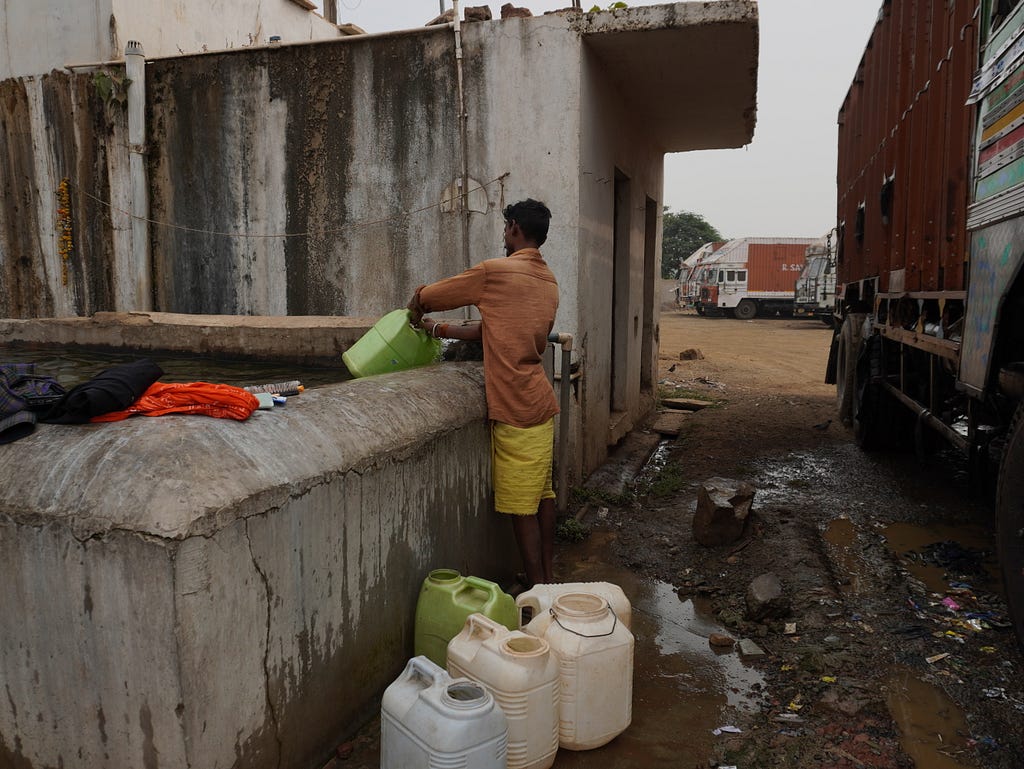
A young man from the settlement filling water at the dhaba on the highway.
Taking this struggle forward, on 1 August about 40 people from the settlement reached the Gwalior Collector’s Office and the Municipal Corporation and submitted an application. The Deputy Commissioner of the Municipal Corporation assured them that a handpump would be installed in the settlement within three days and that, if it was not installed, he would get the work done himself.
The very next day, some government officials came to the settlement to conduct a survey. They completed the survey, prepared a report and took it away. The people were given no information about the report.
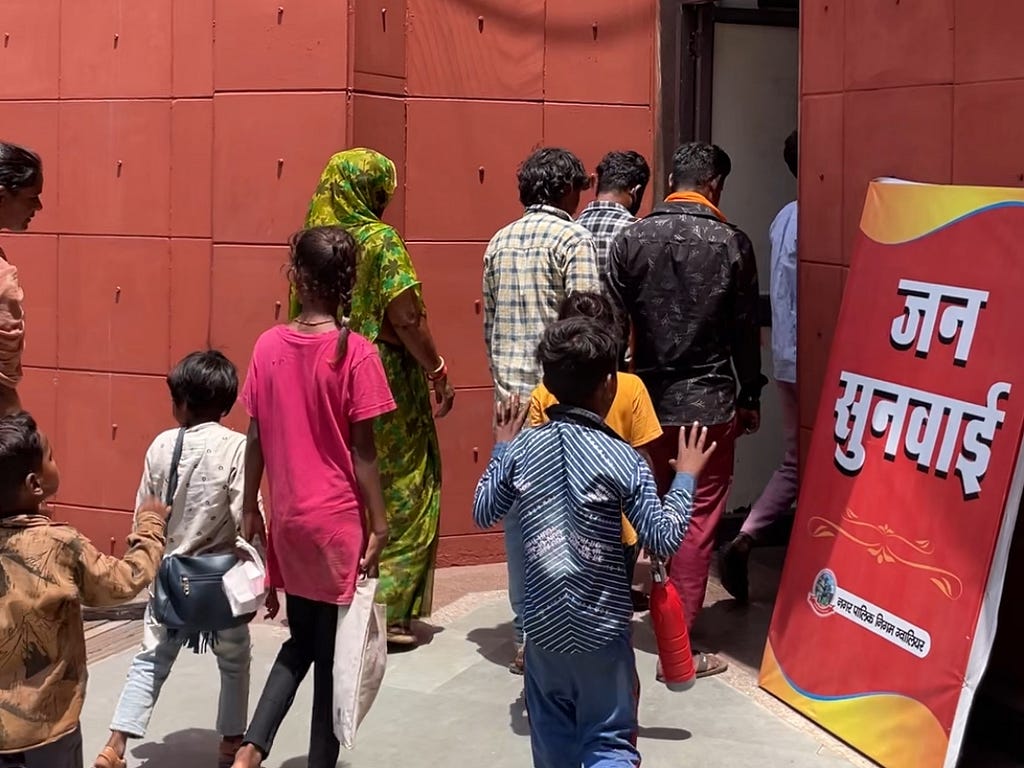
People from the settlement entering the Municipal Corporation office.
After six days had passed, the people contacted the official who had come for the survey and tried to learn why the handpump had not been installed. According to the officials, the land falls under the Forest Department and the Municipal Corporation cannot install a handpump there. The people of the settlement had only one question for the officials:
If the land belongs to the Forest Department, how are there handpumps and borewells in the nearby settlement, and why are only we not being given facilities?
The only answer was:
The administration is also bound by the government’s rules, and this work can be done only by the minister.
After this answer, the administration also gave up.
Some time later, the people of the settlement reached the minister’s office with their problem. The staff at the minister’s office assured them that a handpump would be installed in the settlement on 11 September. Hearing this, the people of the settlement breathed a sigh of relief. On the 11th there was a different kind of excitement in the settlement. They had chosen the place where the handpump would be installed and had also brought items to worship the machine, but while they waited, evening came and no one arrived.
On the 17th, the people of the settlement again reached the minister’s public hearing. After waiting for a few hours, they met the minister himself. According to the minister too, the reason the handpump had not been installed was that the land fell under the Forest Department. Even so, the minister assured them that, in some way, an arrangement for water would be made within the next three days and the water problem would end.
From that day until today, no one from the government or administration has come to the settlement, nor has there been any news of another arrangement for water. They tried many times to contact the minister’s office by phone, but received no answer.
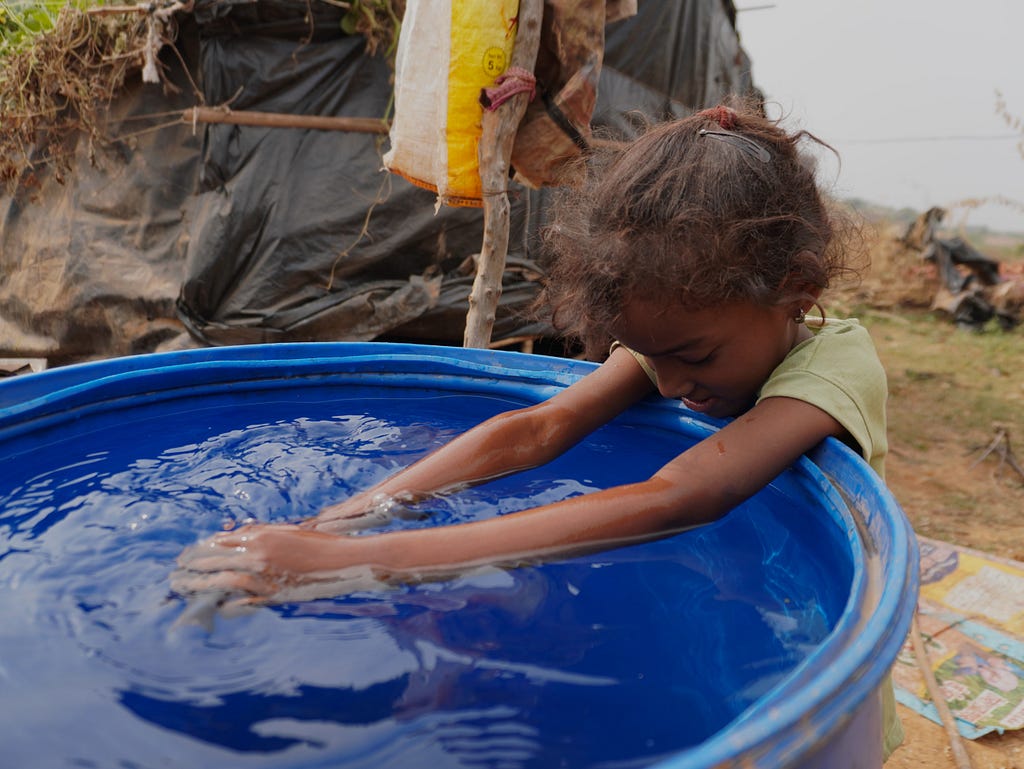
This fight for a fundamental right has remained only a game of going from office to office. The government that has the capacity to stop a river for public development has failed to remove this problem for the people. In such struggles for daily necessities, the children of the settlement are also deprived of education. It is rightly said that water is life, but if there is no water, what kind of life is it?
Even today, this settlement hopes that, through the government, the administration or any other way, the thirst of these people will simply be quenched.


