Swang: A dance of tradition, freedom, and fading glory
Swang brings Sahariya stories, music and dance to community festivals, while migration and urbanisation threaten the tradition’s future.
Swang is a vibrant dance form from the Sahariya Adivasi tribe, celebrated with much fervour during the Holi and Navratri festivals. It is a dynamic mix of storytelling, rhythmic free flowing movement, and colourful costumes that bring to life popular folk tales, including incidents from the Ramayana, and more recently, social messages. With its infectious energy, it invites spectators to experience a cultural celebration that is as much about the performers as it is about the community’s shared history and stories.
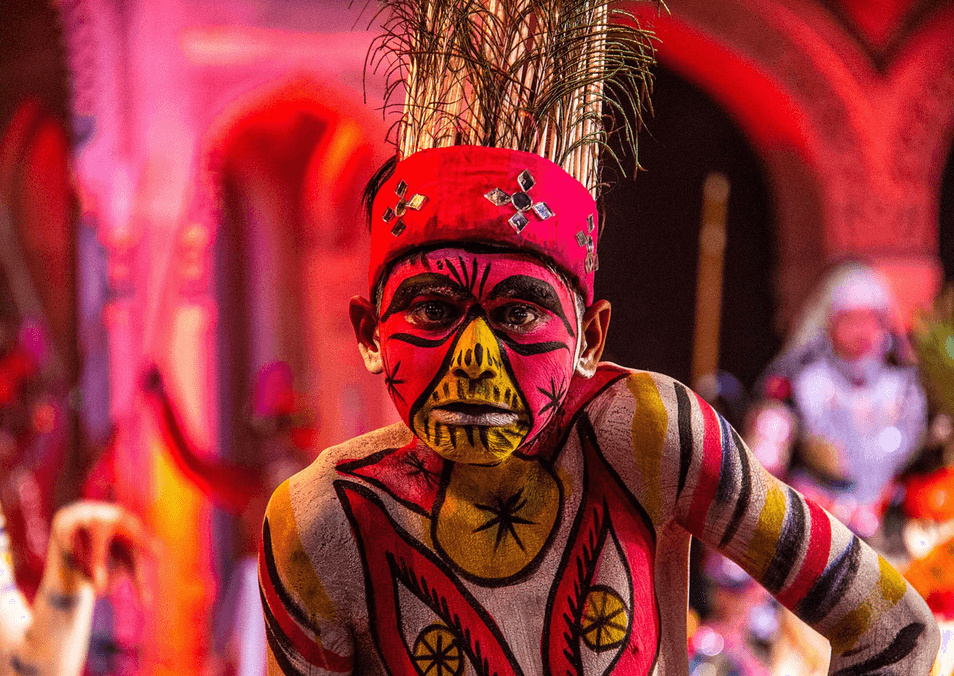
Zenith Society incorporates Sahariya motifs in its design for this section of the newsletter. Image by Tiwaribharat, licensed under CC BY-SA 4.0, via Wikimedia Commons.
Storming into the crowd, a group of tall, strikingly painted characters take the floor, their peacock feather headdresses swaying as they move. Dressed in fringed skirts, they are joined by dancers in animal costumes and ladies in flowing skirts and veils. A small band plays an energetic beat, its melodies rising from harmoniums and traditional instruments. The air is filled with the sound of the dancers’ ululations, and the crowd responds with cheers, fuelling the dancers' movements as they begin to narrate the Ramayana and other folk tales through song and dance.
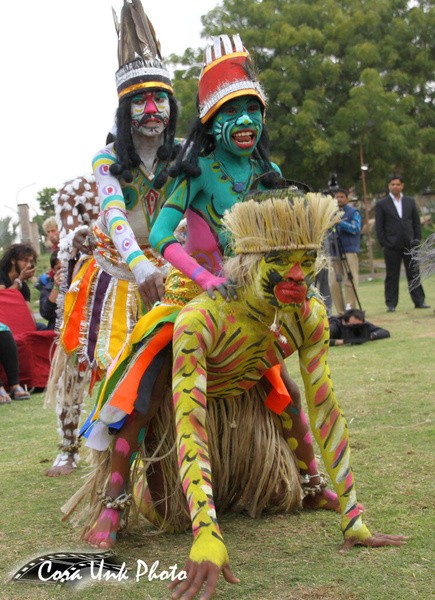
Swang performance Photo by: Cora Unk Photo
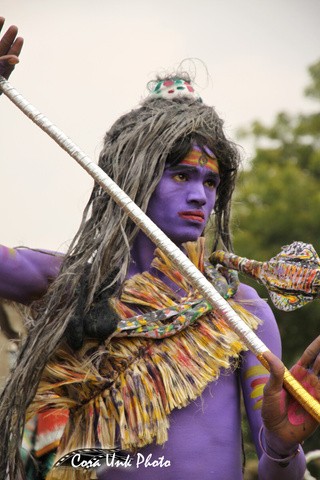
Swang dancer, photo by: Cora Unk Photo
As the performance unfolds, dancers mimic animals and birds with exaggerated, playful gestures, their facial expressions full of whimsy. Pairs of dancers interact, adding acrobatic flips and quirky formations to their routine. The mischievous animal-costumed dancers engage with the audience, teasing children and filling the space with laughter. Most Sahariya settlements boast their own swang troupe, who perform passionately, bringing joy and vibrant tradition to their communities and nearby villages.
The art form, however, is threatened by the tides of urbanisation, which tends to sweep the Sahariyas into other forms of employment, often forcing them to migrate from their familiar lands and community.


