Labour and learning: A balancing act
Ramlakhan Sahariya recounts balancing education with labour, escaping exploitation in Gujarat and rebuilding a life rooted in dignity.
We continue the story of Ramlakhan Sahariya, whose journey mirrors that of many Sahariya adivasi youngsters walking a tightrope between education, work, and family duties. Responsibility comes from an early age as seen in the case of Ramlakhan.
I had discovered that education has the power to change my life. However, after Class 10, financial constraints pushed me into labour at brick kilns, construction sites, and farms. I managed to attend school whenever I could. In Class 12, I stayed at a government hostel, where I also took care of younger Adivasi students, handling admissions and some tutoring as the staff left those duties to senior students.
After school, I couldn’t afford college. That’s when I got trapped in bonded labour. A contractor offered me and 25 others a small advance, promising INR 9,000 monthly wages, daytime shifts, decent food, medical care, and to facilitate remittances home. We left for Gujarat where they split us into small groups and sent us to harsh worksites laying pipelines. Our food was basic, consisting of dal (lentils) and potatoes, and our work was relentless. One day, during tunnelling, we lost a machine’s pilot rod. The supervisor made us dig 20 feet for three days without food or proper tools. A vendor later suggested checking the drainage. Then four of us, including me, were forced into a filthy underground drain, where we finally found it.
After two unpaid months, we demanded our wages. The supervisor refused. Six of us including my brother Ramveer, cousins Rajkumar and Ajay, and two others escaped. With no money, we walked around to the station, boarded a train without tickets, and reached Makshi, Madhya Pradesh, where kind strangers bought us breakfast and bus tickets home to Gwalior.
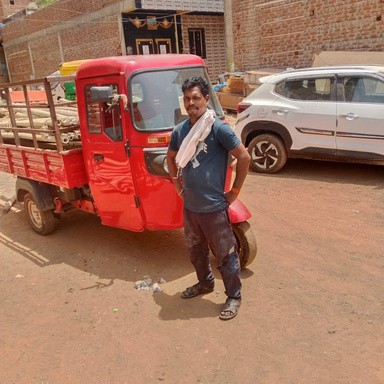
Ramlakhan’s brother operating his loading vehicle in Gwalior
Only workers who stayed until the end of the project received full payment before returning home. Those who visited during festivals had wages held back to ensure their return. Many of the workers continue working there. However, the six of us who escaped never sought manual labour work again, choosing instead to remain in our villages seeking whatever jobs we can find in an environment we understand and close to our families.
This experience made me realise that my life had no value to such exploitative contractors. I was determined to stop wasting my life in this work and instead pursue further education to secure a better job. Of the six of us who escaped together, four continue labouring in construction or agriculture nearby and my elder brother now drives a loading vehicle in Gwalior’s vegetable market.
Despite these hardships, my family’s sacrifices and hope kept me going, as I believe education was the only path to a better future and dignified working conditions. I completed my degree and currently work with Zenith as community worker.
Working with strangers under inhumane conditions has left many young people in our community traumatised and reluctant to interact with outsiders. Yet, when seeking basic necessities, we often succumb to the oppressive cycle where we are bound to lose.
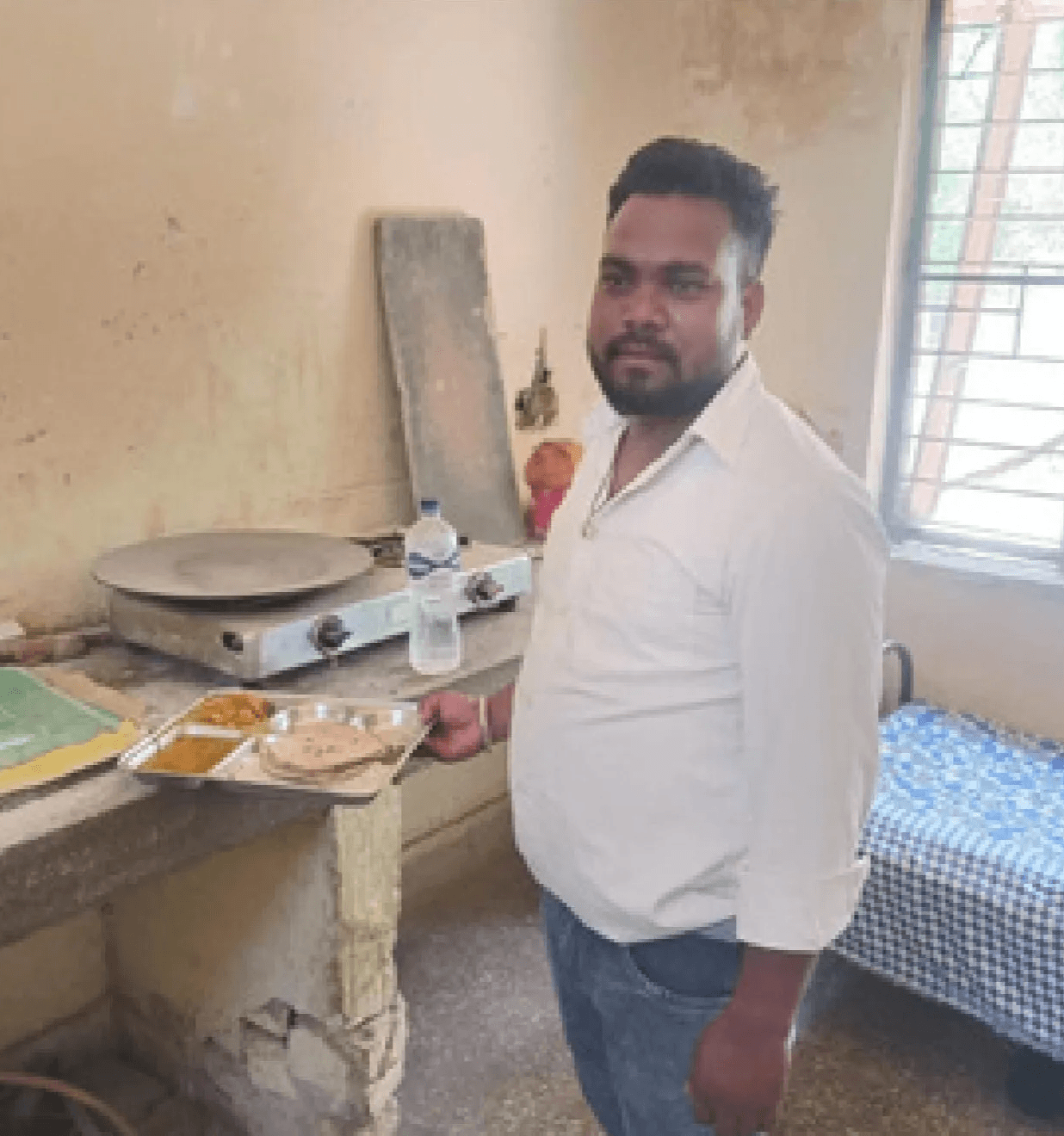
Ramlakhan revisits his youth hostel


