Justice for Ratan Sahariya: A triumph over adversity
After being shot and denied timely relief, Ratan Sahariya defines justice on his own terms, rebuilding his home and securing a livelihood.
In April 2023, Zenith Society’s Community Engagement Lead, Sunil Kumar chanced upon a Sahariya Adivasi settlement (basti) in Gwalior District. The basti residents were living in extreme poverty, lacking basic facilities such as housing, electricity and clean water. Motivated to establish contact, raise awareness about their rights, and encourage them to reach out to Zenith’s team, Sunil ji visited the settlement regularly to gain their trust. His efforts took a serious turn when he learned that Ratan Sahariya, a young man from the tribe, had been shot during a petty altercation with a member of a powerful community shortly thereafter. Shocked by the violence, Sunil ji and Zenith Society’s legal team committed to fighting for justice on Ratan’s behalf.
Zenith Society’s team closely monitored the case—ensuring the charges were correctly framed and successfully opposed bail applications of the accused and his driver. Sunil ji informed Ratan about the government’s financial relief under the SC/ST Act, which included INR 2 lakh upon registering the FIR, INR 1 lakh when the case was sent for trial, and INR 1 lakh upon case resolution. However, another challenge emerged. Ratan did not possess a caste certificate or a bank account to claim the compensation. Zenith Society supported him to open a bank account and secure a caste certificate through proper channels. The team also ensured he received medical support through the Ayushman Bharat scheme, which provided up to INR 5 lakh for medical treatment.
To the team’s surprise, no compensation under the Act was provided as the department kept stalling the request citing a lack of funds. Meanwhile, Ratan—his family’s sole breadwinner—could not work due to injuries and consequently the family suffered each day, barely managing food expenses.
One day, Ratan called the team to the basti with a request that he no longer wishes to pursue the legal battle. He feared that being hopeful to get justice from the system will not yield any benefit.
“Hamari na hi kisi ne suni hai, na hi koi sunega” (Neither has anyone listened to us, nor will anyone listen in future).
Sunil ji persisted and advised that Ratan continue the legal battle but he stood firm.
“Right now I want to save my family from hunger—justice for me is not punishment for the accused but financial aid.”
Eventually, Ratan decided to settle the matter.
There were two options before him: securing punishment for the accused or negotiating a settlement that would improve his family’s future. Ratan chose the latter, believing it to be the true justice he sought. He used the funds to reconstruct his house which was destroyed during the monsoon when the case was under trial and buy an e-rickshaw to ferry the children of the settlement to school as his new livelihood.
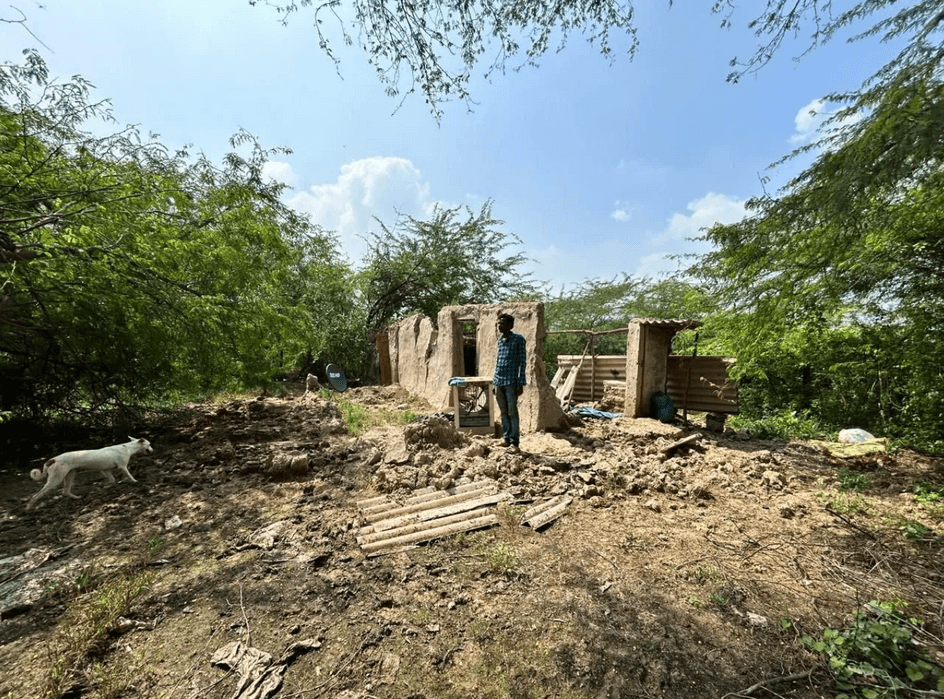
Ratan surveying his destroyed home amidst fighting a legal battle and recovering from a bullet wound

Ratan looking forward to a bright future with his home and e-rickshaw
This case has left a lasting imprint on the team with many larger questions:
Was Ratan right in choosing what he chose? What is justice after all?
Should external individuals be allowed to define justice for a community?
We invite you, the reader to share your thoughts with our team at zenithssle.communications@gmail.com.


