“I won’t let my daughter be chained to the norms of patriarchy.”
Sangeeta reflects on surviving child marriage, finding dignity in community work and helping her daughters challenge patriarchy.
A transcript from an interview with Sangeeta, our community leader in Malanpur.
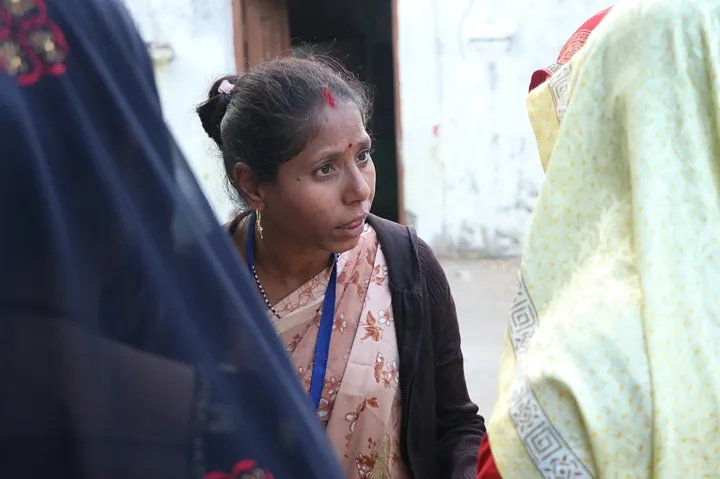
Sangeeta, a community worker in Malanpur.
I was denied the opportunity to finish my education and was married off at fifteen years old. I’ve been the ‘Bharatiya naari’ society expects me to be and lived in fear for many years. I was mistreated and denied opportunities because I’m poor and uneducated. But I’ve not let that deter me into moulding my life the way I want to. Today, I walk with my head held high and speak my mind. So what if I’m poor and uneducated? I’m no different than anybody else.
I work at a Samudayik Adhikar Kendra (community centre) in Malanpur, an industrial town in Madhya Pradesh which is facing many issues regarding migrant workers’ rights. I support migrant workers in accessing government schemes and entitlements. The people at my previous workplace used my illiteracy to deny me responsibilities. However, my experience with the Samudayik Adhikar Kendra has been a welcome change. My work requires me to work with a lot of people in the community, including bureaucrats, while also building sustainable relationships with the community. Many of them invite me to their houses to sit and eat with them; this affection and respect that I receive from them doesn’t come from education, does it?
It is important to me to create space for my children; especially for my daughters- so they can ‘just be’, to support them to stand up for themselves and to imbibe in them the notion that they deserve equal rights and respect as the boys their age. We must teach girls to be independent and to have self-respect; it is the only way to break free from the chains of patriarchy, and a little courage goes a long way.
This one time, my eldest daughter came home crying when a boy in the village misbehaved with her. I told her to stop crying instead of telling her to nip it in the bud. Since then she’s been taking care of herself and has even beaten up a couple of them. A boy’s parent once came home to complain of the beating up my daughter had meted out to him, he said “Ladki thi tumhari, agar ladka hota toh dekhleta” (translation: Be careful, I’m letting it go because she is a girl, had she been a boy things would have been different) — I replied with “Chacha, meri ladki hai. Tumhara ladka hai, tum abhi bhi dekhlo…ladki hai iska matlab ye nahi ki sahti rahegi.” (translation: I have a girl, but you have a boy, you must be careful. She won’t stay calm just because she’s a girl)
“Chacha, meri ladki hai. Tumhara ladka hai, tum abhi bhi dekhlo…”
My eldest also plays kabaddi, much to my family’s annoyance that a girl is bringing home trophies in what is otherwise a ‘boy’s sport’. I’ve been under a lot of pressure from society to get her married, they say she’s almost eighteen and nobody will marry her if she behaves the way she does. But I don’t pay heed to any of that. The same people will not bat an eyelid if my daughter’s husband were to ever mistreat her.
“I will fight for her right to finish her education and live her life the way she wants to. I’ve had neither the opportunity nor the privilege of choice, but it’s important that my daughters do. Change starts at home.”


